Why a routine beats a list of tips here
South Texas backyards do not have a mosquito off-season, so a one-time effort fades fast. The reason a sequence works better than scattered tips is that each step removes a different part of what a mosquito needs, water to breed in, shade and damp vegetation to rest in, and the conditions that let a population rebuild. Skipping the early steps makes the later ones far less effective.
The routine below is ordered deliberately: eliminate the breeding water first because it is the single highest-impact action, then reduce resting harborage, then maintain the routine on a rhythm that matches the year-round pressure rather than a single weekend push.
The step-by-step backyard routine
Follow these in order; the sequence is the point. Each step assumes the one before it is done.
- Walk the yard and empty every water source. After any rain or irrigation, do a deliberate circuit: plant saucers, buckets, tarps, toys, wheelbarrows, clogged gutters, low spots, and anything holding water for more than a couple of days. This single step removes more future mosquitoes than anything else, because it stops them before they ever fly.
- Fix the sites you cannot empty. For water you cannot drain, untippable low areas, drainage features, ornamental water, change the conditions: improve drainage so it does not stand for days, keep ornamental water moving or stocked, and store anything that collects rain upside down or under cover so the next storm cannot refill it.
- Cut back the resting harborage. Adult mosquitoes rest by day in dense, shaded, humid vegetation. Trim overgrown shrubs, thin dense ground cover near sitting areas, and keep grass from going long along fences and the house, so the yard holds fewer adults between feedings.
- Defend the times and places you use the yard. Use fans on patios (mosquitoes are weak fliers), avoid leaving doors propped during dawn and dusk peaks, and keep screens intact so the outdoor population does not simply move indoors.
- Repeat on a schedule, not a whim. Put the walk-and-empty circuit on a fixed cadence, especially through the warm, stormy months, because in this climate the pressure regenerates continuously and a lapsed routine loses ground quickly.
Why source reduction outranks everything else
If only one step gets done, it should be the first one. A mosquito spends its entire pre-adult life in standing water; remove that water and the population is cut before it can fly, feed, or reproduce. Spraying adults, repellents, and traps all address mosquitoes that already exist, which is why they feel like they never quite catch up if the breeding water is left in place. Source reduction is the only step that prevents mosquitoes rather than reacting to them, and in a yard it is almost entirely within the owner's control.
Want this handled by a local pro? Call us.
Call (831) 703-7142 — Mon–Sat 7AM–7PM. No forms, just a real local team.
Call (831) 703-7142Where the routine ends and treatment begins
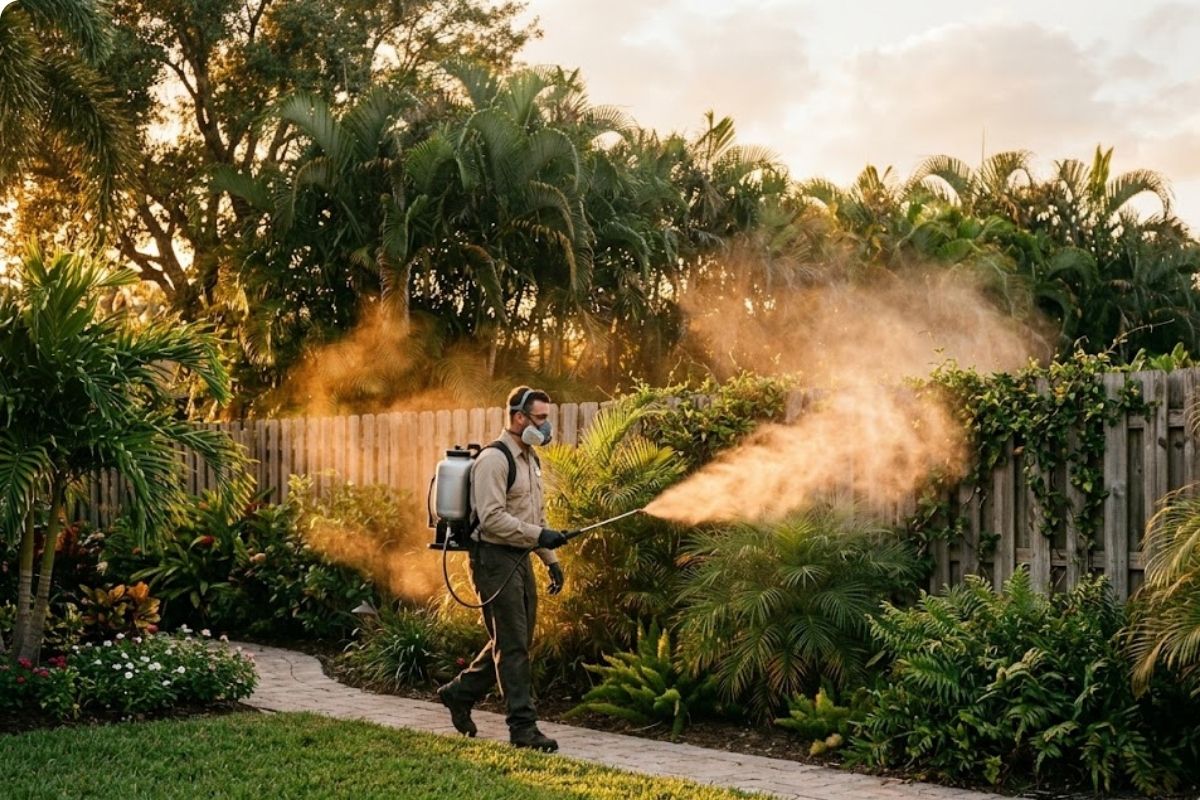
A diligent backyard routine handles what a property generates on its own. What it cannot handle is pressure arriving from off the property, the resaca system, irrigation canals, a neighbor's untended yard, that keeps resupplying adults no matter how clean a single yard is. That is the line where professional treatment adds value: maintaining pressure on incoming and resting adults and treating harborage on a recurring rhythm, layered on top of, not instead of, the owner's source reduction.
The honest framing is that the two are complementary. The routine removes the local supply; recurring treatment manages the imported supply. Neither replaces the other in a year-round-pressure environment like this.
Setting up recurring help alongside the routine
If the off-property pressure is the part outpacing your routine, a recurring plan is the piece that matches it. We are based at 3144 Boca Chica Blvd in Brownsville and work Monday through Saturday, 7AM to 7PM. Where mosquitoes covered under a recurring plan come back between scheduled visits, the team returns and re-treats at no extra cost. To layer seasonal treatment onto your backyard routine, call (831) 703-7142 and describe the yard and what is nearby, a resaca, a canal, heavy neighboring vegetation, since that determines how much imported pressure you are dealing with.
Frequently Asked Questions
Eliminate standing water. A mosquito spends its entire pre-adult life in it, so removing it cuts the population before they can fly, feed, or reproduce, which outranks spraying, repellents, and traps that only address existing adults.
Each step removes a different requirement, breeding water, then resting harborage, then ongoing maintenance. Skipping the early steps makes the later ones far less effective, since you are treating adults a removed water source would have prevented.
On a fixed cadence, and after every rain or irrigation through the warm, stormy months. In this climate the pressure regenerates continuously, so a routine done only occasionally loses ground quickly.
Yes, on patios and sitting areas. Mosquitoes are weak fliers, so moving air makes it hard for them to approach and land, which is a useful defense for the times and places you actually use the yard.
Because pressure arrives from off the property, the resaca system, irrigation canals, or a neighbor's untended yard, which resupplies adults regardless of how clean a single yard is. That imported supply is where treatment adds value.
No, they are complementary. The routine removes the local supply your property generates; recurring treatment manages the imported supply from off-property. In a year-round-pressure environment neither replaces the other.
Where mosquitoes covered under a recurring plan come back between scheduled visits, the team returns and re-treats at no extra cost. Call (831) 703-7142 to set up seasonal coverage alongside your routine.