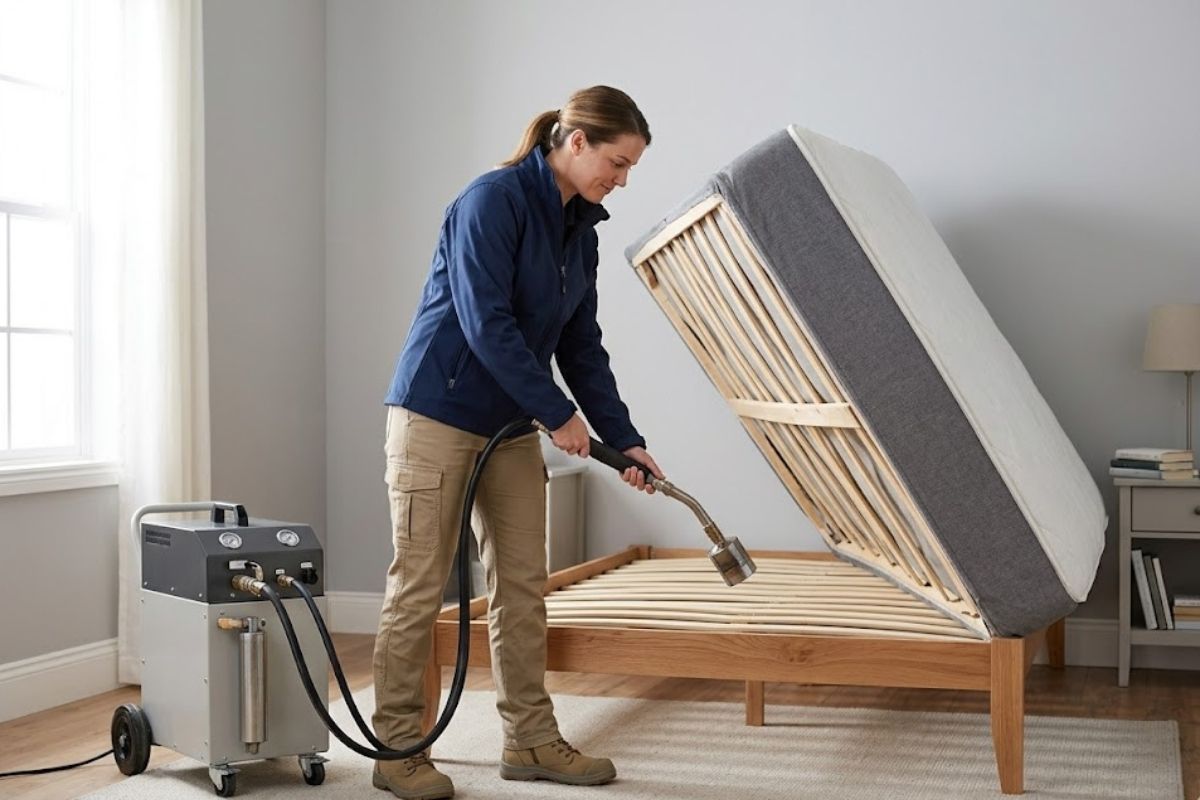
Reframing the "which is better" question
Asked whether heat or chemical treatment is better for bed bugs, the honest answer is that the question is framed wrong. Neither is universally superior; each has a distinct profile of strengths and limitations, and the better choice is the one whose tradeoffs fit the specific situation, the structure, the severity, the logistics, and the likelihood of reintroduction. Anyone claiming one method always wins is selling a method, not solving a problem.
So instead of crowning a winner, it is more useful to understand what each actually does well, where each is weak, and what circumstances tip the decision, which is what the rest of this lays out.
What heat treatment does well, and where it's limited
Heat treatment raises the space to a temperature lethal to bed bugs at all life stages, including eggs, in a single properly executed session. Its strengths are reach and completeness within the treated space: heat penetrates harborage that is hard to reach with applied product, and it addresses eggs that some approaches struggle with. Its limitations are real too: it provides no residual protection, so anything reintroduced afterward is not stopped, it requires significant preparation and control of the space to reach and hold lethal temperature everywhere including cold spots, and heat-sensitive belongings need management. Heat is excellent at clearing a defined space thoroughly at one moment; it does nothing about the next introduction.
What chemical treatment does well, and where it's limited
Modern chemical treatment uses targeted products, often across multiple visits, to kill bed bugs and, importantly, leave residual activity that continues working after the technician leaves. Its strengths are that residual, which provides ongoing protection against survivors and some reintroduction, and logistical flexibility, it can be staged over visits and adapted as monitoring shows results. Its limitations are that it typically requires more than one visit to address eggs hatching after initial treatment, deep or well-hidden harborage can be harder to reach than with whole-space heat, and outcomes depend on thoroughness and follow-through. Chemical trades the single-session completeness of heat for ongoing residual coverage over time.
Want this handled by a local pro? Call us.
Call (831) 703-7142 — Mon–Sat 7AM–7PM. No forms, just a real local team.
Call (831) 703-7142What actually tips the decision
The deciding factors are situational. High reintroduction risk, a turnover-heavy building, ongoing exposure, favors an approach with residual coverage, since single-moment completeness is undone by the next introduction. A contained, one-time situation where thorough single-session clearance is the priority favors heat. Structure and contents, heat-sensitive items, the ability to prep and seal a space, can constrain heat. Severity and harborage depth influence reach. Often the realistic answer is not either-or but a matched or combined approach decided after inspection, which the table below summarizes. The point is that the right method is an output of the assessment, not an input.
Deciding well, with help
Because the correct choice depends on factors only visible on inspection, severity, harborage, structure, and especially reintroduction risk, the productive step is an assessment that recommends the method to the situation rather than the reverse. Our Brownsville office sits at 3144 Boca Chica Blvd, open Monday through Saturday, 7AM to 7PM. If a bed bug problem covered under a plan returns between scheduled visits, we come back and re-treat with no added charge. To get a method matched to your situation, call (831) 703-7142 and describe the property, the severity, and whether reintroduction (turnover, travel, shared building) is a factor.
| Factor | Heat treatment | Chemical treatment |
|---|---|---|
| Single-session completeness | Strong, lethal to all stages including eggs in one proper session | Usually needs multiple visits to catch later-hatching eggs |
| Residual protection | None after the session ends | Yes, continues working against survivors and some reintroduction |
| Reaching deep harborage | Whole-space heat penetrates well | Depends on access; deep hidden harborage can be harder |
| Reintroduction risk fit | Weaker, no protection against the next introduction | Stronger, residual coverage helps with ongoing exposure |
| Constraints | Prep, sealing, cold spots, heat-sensitive items | Thoroughness and follow-through across visits |
Frequently Asked Questions
Neither universally. Each has a distinct profile of strengths and limitations, and the better choice is the one whose tradeoffs fit the specific situation, structure, severity, logistics, and reintroduction risk. The right method is an output of assessment, not a fixed answer.
Thoroughly clearing a defined space in a single session, including reaching hard-to-access harborage and addressing eggs. Its main limitation is that it leaves no residual protection, so it does nothing about the next introduction.
Providing residual activity that keeps working after the visit, giving ongoing protection against survivors and some reintroduction, with logistical flexibility across visits. It typically needs more than one visit and can struggle with very deep harborage.
When exposure is ongoing, a turnover-heavy building or repeated travel, an approach with residual coverage is favored, because heat's single-moment completeness is undone by the next introduction.
Often the realistic answer is a matched or combined approach decided after inspection rather than strictly either-or, since severity, harborage depth, structure, and reintroduction risk can each point different directions.
Because the deciding factors, severity, harborage depth, heat-sensitive contents, ability to seal a space, and reintroduction risk, are mostly visible only on inspection, so the method should follow the assessment, not precede it.
If a bed bug problem covered under a plan returns between scheduled visits, we come back and re-treat with no added charge. Call (831) 703-7142 and describe the property, severity, and whether reintroduction is a factor.