The pattern behind the timing
People often notice rodents appear in the home right around a weather change, a cold snap, a heavy rain, a storm, and assume it is coincidence. It is not. Rodents respond to environmental pressure by relocating, and a structure is the most stable shelter available when outdoor conditions deteriorate. The timing is the signal: a weather shift is essentially an eviction notice for outdoor rodents, and your home is the nearest hotel.
Brownsville's specifics shape which shifts matter. It is the rain and storm events more than cold that dominate here, because the climate rarely delivers a hard freeze but regularly delivers heavy water, and water moving through the environment is one of the strongest displacement triggers there is.
What each kind of weather shift actually does
Different shifts push rodents for different reasons. Heavy rain and storms flood the burrows, drainage edges, and low ground where roof rats and house mice shelter outdoors, and a flooded harborage forces immediate relocation toward dry, elevated structure. The milder cool spells the region does get reduce outdoor comfort enough to make a warm wall void or attic noticeably more attractive. Even a sharp dry-down after wet weather shifts where food and water are, moving rodents along with the resources. In each case the mechanism is the same: the outdoor situation becomes less viable than the indoor one, and rodents do the rational thing.
This is why intrusions cluster rather than spread evenly through the year. The pressure is event-driven, and the events are weather.
How they actually get in once they're motivated
A motivated rodent does not need much. A house mouse can use a gap around the width of a pencil; a roof rat needs little more. The common Brownsville entry routes are predictable: gaps where utilities and plumbing penetrate the structure, weep holes and foundation gaps, garage door corners and worn seals, and, very importantly here, the roofline. The region's sabal-palm canopy and tree cover give roof rats elevated bridges directly to eaves, vents, and roof junctions, so a great many entries happen up high rather than at ground level, which is exactly where people forget to look.
The key point is that these gaps exist year-round, but they only get used heavily when a weather event supplies the motivation. The structure's vulnerabilities and the weather trigger combine; neither alone produces the spike.
Want this handled by a local pro? Call us.
Call (831) 703-7142 — Mon–Sat 7AM–7PM. No forms, just a real local team.
Call (831) 703-7142Why reactive trapping alone keeps failing
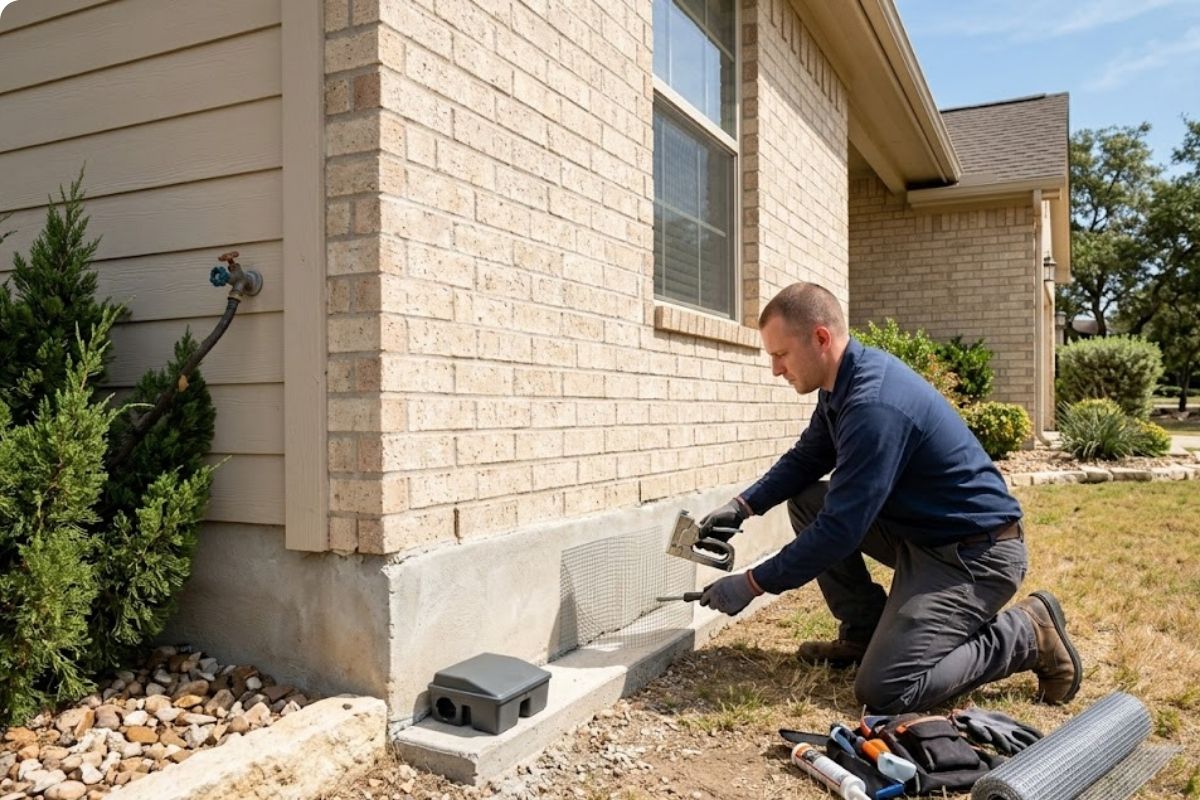
Catching the rodents that came in during the last storm addresses the symptom of that event, not the route they used or the next event that will use it again. As long as the entry points remain open, every qualifying weather shift re-runs the same intrusion. This is the core reason a household feels like it has a recurring rodent problem when it actually has a recurring weather-plus-gap problem. The durable fix is exclusion, closing the routes, so that the next displacement event has nowhere to funnel rodents, combined with removing the animals already inside.
Getting ahead of the next weather event, with help
Effective rodent work in Brownsville is exclusion-first: identifying and sealing the ground-level and, critically, roofline routes, then removing the current population, so the predictable weather trigger no longer has a path to exploit. Because the canopy-driven roof entries are easy to miss and awkward to reach, this is where professional assessment adds the most.
From our Brownsville base at 3144 Boca Chica Blvd we operate Monday through Saturday, 7AM to 7PM. Where a rodent issue covered under a plan recurs between scheduled visits, the team returns and re-addresses it with no added charge. To get ahead of the next weather-driven push, call (831) 703-7142 and describe the home and whether you have heard activity overhead or at ground level.
Frequently Asked Questions
It is not coincidence. Rodents relocate under environmental pressure, and a structure is the most stable shelter when outdoor conditions deteriorate. A weather shift effectively evicts outdoor rodents and your home is the nearest refuge.
Rain and storms more than cold, since the climate rarely freezes hard but regularly delivers heavy water. Flooded burrows and drainage edges force immediate relocation toward dry, elevated structure.
A house mouse can use a gap roughly the width of a pencil and a roof rat needs little more, so even minor openings around utilities, weep holes, garage corners, and the roofline are viable entry points.
Brownsville's sabal-palm canopy and tree cover give roof rats elevated bridges directly to eaves, vents, and roof junctions, so many entries happen up high rather than at ground level, exactly where people forget to look.
Trapping addresses the rodents from the last event, not the route they used or the next weather event. With entry points still open, every qualifying weather shift re-runs the same intrusion.
Exclusion, closing the ground-level and roofline routes, combined with removing the animals already inside, so the next displacement event has no path to funnel rodents indoors.
Where a rodent issue covered under a plan recurs between scheduled visits, the team returns and re-addresses it with no added charge. Call (831) 703-7142 and say whether you hear activity overhead or at ground level.