Why preparation decides the outcome
Bed bug treatment succeeds or fails largely on what happens before the technician arrives. The reason is simple: bed bugs hide in seams, voids, and clutter, and treatment can only reach what is accessible. Poor preparation leaves harborage shielded, which is one of the most common reasons a treatment seems to fail and has to be repeated. Good preparation exposes the bugs to the treatment instead of hiding them from it.
There is also a way preparation can actively make things worse, and it is worth stating before the steps: the instinct to grab infested furniture and bedding and rush it out of the house is exactly how bed bugs get carried into clean rooms or, in shared buildings, into a neighbor's unit. The goal of prep is to expose harborage and contain the problem in place, not to evacuate it through the home.
The preparation steps, in order
Follow these in sequence. If your treatment provider gives you a specific prep sheet, that always takes priority over a general list, since it is matched to your situation and the method being used.
- Strip all bedding, linens, and removable fabric covers and wash them on the hottest cycle the fabric allows, then dry on high heat; bag them sealed and keep them out of the treatment area until the work is finished.
- Bag clothing and soft items from closets and dressers in the affected rooms, washing and drying on high heat what can take it, and seal the bags rather than carrying loose items through the house.
- Reduce clutter on the floor and around the bed in place, bagging items where they are instead of moving piles into other rooms, so harborage is exposed without spreading the infestation.
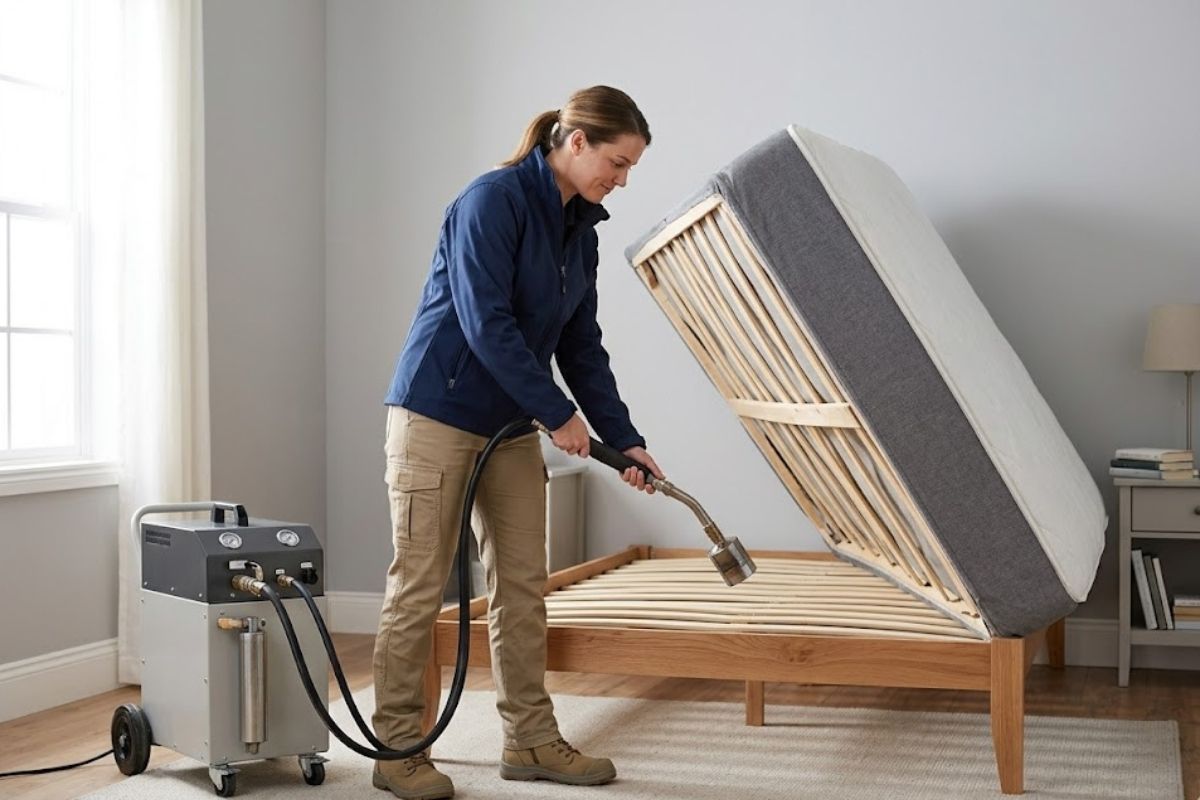
- Pull beds and furniture a short distance from the walls only as your prep instructions direct, so the technician can reach seams, frames, and baseboards.
- Vacuum floors, the bed frame, and seams thoroughly, then immediately seal and dispose of the vacuum bag or empty the canister outside into a sealed bag.
- Do not apply store-bought sprays or foggers, which scatter bed bugs deeper into voids and walls and make professional treatment harder.
- Tell the provider if the unit shares walls with neighbors, since adjoining units may need inspection for the treatment to hold.
Each step either exposes harborage or prevents spread; skipping the containment-minded ones is what turns a one-room problem into a whole-home one.
The prep mistakes that backfire
A few well-intentioned actions reliably make bed bug treatment worse. Dragging an infested mattress or couch outside through the house spreads bugs along the route and into other rooms. Moving clothing and clutter into an untreated room relocates the infestation rather than reducing it. Using foggers before treatment drives bugs deeper into wall voids where they are harder to reach. And discarding furniture prematurely is often unnecessary and, done by carrying it through the building, actively spreads the problem.
The pattern in all of these is the same: motion through the home is the enemy. Bed bugs spread by being carried, so preparation that moves infested material around undoes the treatment before it starts. Containing in place is the principle that keeps prep from backfiring.
Want this handled by a local pro? Call us.
Call (831) 703-7142 — Mon–Sat 7AM–7PM. No forms, just a real local team.
Call (831) 703-7142After treatment and what to expect
Preparation continues a little past the treatment itself. Follow the provider's guidance on when it is safe to return items and re-enter treated areas, and keep laundered items sealed until then. Expect that many treatments require a follow-up visit, because eggs that hatch after the first treatment need to be addressed; this is normal and not a sign the first visit failed. Keeping clutter down and not reintroducing uninspected secondhand furniture in the period afterward protects the result.
If you are unsure about any step for your specific situation, it is worth asking before treatment day rather than guessing, since prep done wrong is harder to fix than prep done late. A local provider can walk through the specifics for your home and confirm whether adjoining units need to be part of the plan.
Frequently Asked Questions
Bed bugs hide in seams, voids, and clutter, and treatment can only reach what is accessible. Poor prep shields harborage and is a leading reason treatments seem to fail and must be repeated, while good prep exposes the bugs to the treatment.
Usually not, and dragging it out through the house spreads bugs along the route and into other rooms. A mattress can often be treated and encased instead. Let the provider assess before discarding anything.
No. Foggers and store sprays scatter bed bugs deeper into wall voids, making professional treatment harder. The most helpful pre-treatment actions are hot-laundering fabrics and reducing clutter in place without moving infested items around.
Moving infested furniture, bedding, or clutter through the home or into other rooms. Bed bugs spread by being carried, so motion through the house relocates the infestation and undoes the treatment before it starts.
Eggs that hatch after the first treatment often need to be addressed in a follow-up. This is normal bed bug biology, not a sign that preparation or the first treatment failed.
Tell your provider if the unit shares walls with neighbors. Bed bugs travel between units through shared voids and baseboards, so adjoining units may need inspection for the treatment to actually hold.
Follow the provider's specific guidance on re-entry and returning items, and keep laundered fabrics sealed until then. Returning items too early, especially uninspected ones, can reintroduce bugs to the treated area.