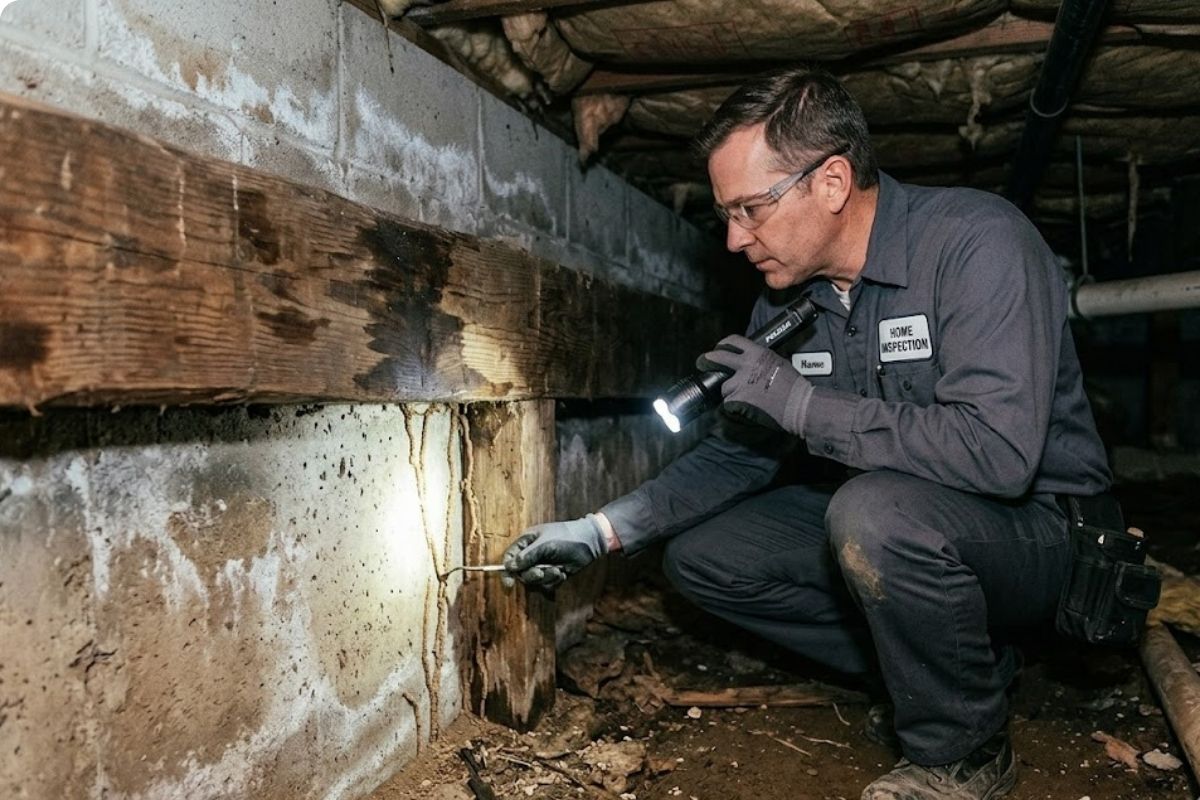
A prevalence question, not just a pest question
Plenty of regions have subterranean termites. The Rio Grande Valley question is sharper: why are they so consistently common here, common enough that they are treated as an expected structural risk rather than an occasional one? The answer is not a single factor but a stack of local conditions that each independently favor this particular insect, and that together make the Valley close to ideal habitat.
Walking through that stack, soil, moisture, climate, and how homes are built, explains why a termite program here is framed as ongoing risk management rather than a one-off event, and why neighbors so often have the same issue.
The clay soil is the foundation of the answer
Subterranean termites live in the soil and need it to stay workable and moist. The Valley's flat delta clay and clay-loam soils do exactly what the insect needs: they hold moisture rather than draining it away quickly, and they crack and shift in ways that create the channels and contact points termites exploit to reach wood. A sandy, fast-draining soil is far less hospitable; the Valley's heavy, moisture-retaining clay is close to the opposite, which is the single biggest reason prevalence is high.
That soil sits in direct, persistent contact with slab foundations across most of the region, which means the moisture termites depend on is held right where structures meet the ground, the exact boundary they need to cross.
Moisture and a climate with no off switch
Two more conditions reinforce the soil. The regional humidity and irrigation keep that clay damp for far more of the year than in arid regions, sustaining colony activity instead of forcing it into long dormancy. And the subtropical climate has no real winter, so there is no seasonal cold that meaningfully slows feeding. In many parts of the country termite activity effectively pauses for months; in the Valley it is closer to continuous, which means a colony here simply has more active feeding time per year than the same colony would elsewhere.
More active time means faster colony growth and more accumulated damage for the same elapsed calendar, which is part of why the problem is both common and consequential here rather than merely common.
Want this handled by a local pro? Call us.
Call (831) 703-7142 — Mon–Sat 7AM–7PM. No forms, just a real local team.
Call (831) 703-7142How Valley building styles complete the picture
The local construction pattern closes the loop. Slab-on-grade foundations are widespread, which puts wood framing close to that moisture-holding clay with limited separation. Older housing stock, common in the historic cores, adds decades of soil contact, original construction details, and settling that create the hidden routes subterranean termites use. The result is a building inventory that, sitting on this soil in this climate, presents the insect with abundant accessible structures rather than well-isolated ones.
None of these factors is unique on its own. What makes the Valley distinctive is that all of them, hospitable soil, sustained moisture, no winter, and termite-accessible construction, line up together, which is the real reason prevalence is so high.
What high prevalence means for a Valley homeowner
The practical takeaway is that termite risk here is a baseline condition of owning a structure on this soil, not bad luck. That argues for periodic professional inspection rather than waiting for visible damage, and for protection approaches matched to clay soil and slab construction rather than generic ones. It also reframes a neighbor's termite problem as relevant information about shared local conditions rather than an isolated incident.
From our Brownsville base at 3144 Boca Chica Blvd we work Monday through Saturday, 7AM to 7PM. Should a termite problem covered under a plan show renewed activity between scheduled visits, we come back and re-treat at no extra cost. To arrange an inspection or ongoing protection matched to Valley conditions, phone (831) 703-7142 and describe the home's age and foundation.
Frequently Asked Questions
A stack of local conditions each favors them: moisture-holding clay soil, sustained humidity and irrigation, a subtropical climate with no real winter pause, and widespread slab and older construction. Together they make the Valley close to ideal habitat.
Subterranean termites need workable, moist soil. The Valley's flat clay and clay-loam hold moisture instead of draining it and crack in ways that create routes to wood, the opposite of inhospitable sandy soil, which is the single biggest prevalence factor.
Yes. With no real winter, feeding does not pause seasonally as it does in much of the country, so a Valley colony has more active time per year, meaning faster growth and more accumulated damage for the same calendar period.
Slab-on-grade construction puts wood framing close to the moisture-holding clay with limited separation, placing the structure right at the soil-wood boundary subterranean termites need to cross.
It can be. High prevalence reflects shared local conditions, soil, moisture, climate, building style, so a nearby termite problem is better read as information about those conditions than as an isolated incident.
Generally yes. Because risk here is a baseline condition of building on this soil rather than bad luck, periodic professional inspection is sensible rather than waiting for visible damage to appear.
Where a termite problem covered under a plan shows renewed activity between scheduled visits, the team returns and re-treats with no added charge. Call (831) 703-7142 to set up an inspection or ongoing protection.