Travel-Out Pest Service for Alamo
Alamo sits between dense mid-Valley development and the Santa Ana refuge brush. We travel out from Brownsville and are upfront about it.
A town between the corridor and the refuge
Alamo sits in the urbanized US-83 corridor but with the Santa Ana National Wildlife Refuge and the Rio Grande's brushy bottomland close to its south. We travel out to Alamo from 3144 Boca Chica Blvd in Brownsville, just under an hour, with no office in the city and no crew stationed there. Its position between continuous urban development and a major brush-and-river natural area is the most useful lens on its pests, and the distance is handled the same honest way as any travel-out location: built into the scheduling conversation rather than disguised as a local presence.
Alamo's distinguishing fact is geographic rather than economic. The continuous mid-Valley fabric runs along its northern and central blocks, while a substantial protected brush-and-bottomland system borders its south, so a property's pest exposure here depends heavily on which of those two worlds it actually borders. A trip out is scoped in the booking call to cover the property fully in one pass rather than requiring short return drives the distance does not support.
It is worth saying why the refuge edge changes the job rather than just adding scenery. A protected brush-and-wetland system does not behave like a maintained yard: it is a continuous reservoir of outdoor insects and rodents with its own moisture, so a property bordering it is not solving an isolated problem but managing pressure that is constantly replenished from land no treatment will ever cover. That reframes the goal from elimination to sustained suppression at the boundary, which is a different plan than an interior-corridor lot needs.
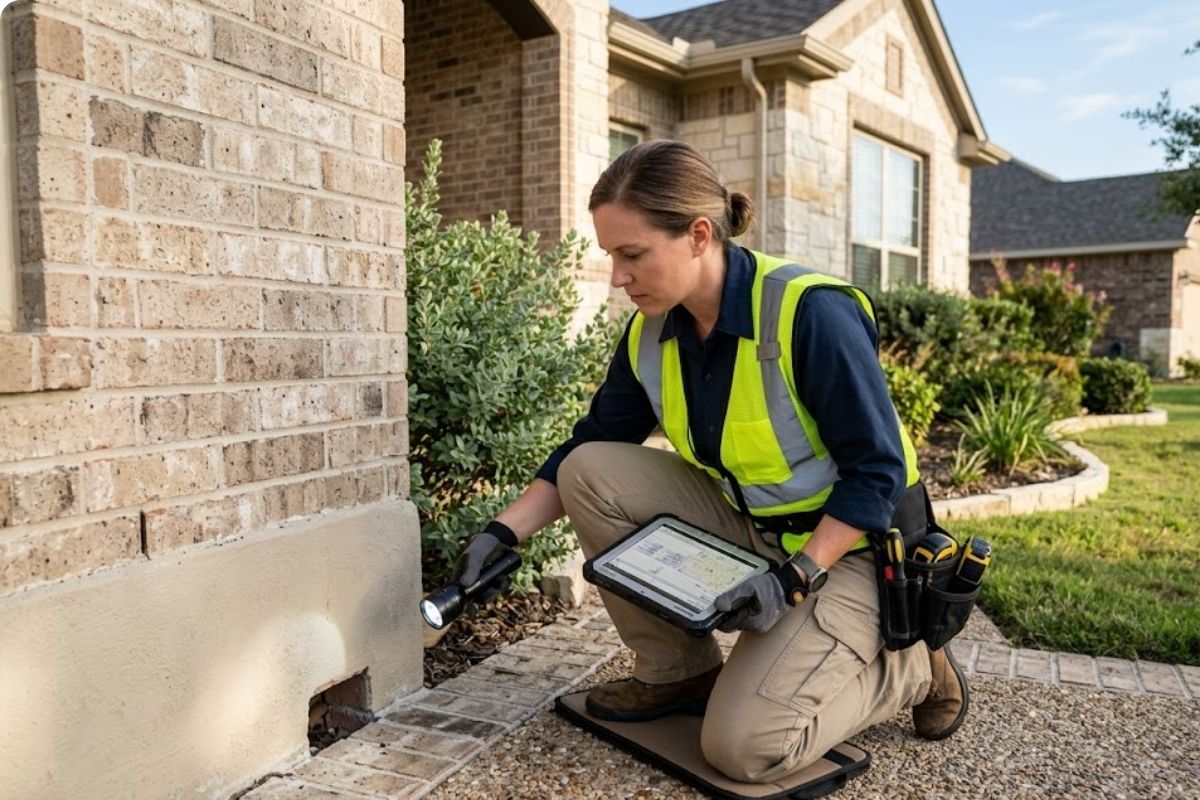
Brushland edge against urban corridor
The refuge and river bottomland to the south are extensive brush-and-wetland habitat, and for properties toward that edge the brush line behaves like rural-edge habitat. It supplies outdoor insects, rodents moving in from undeveloped ground, and the moisture the river corridor holds that sustains mosquitoes well into what a colder region would treat as off-season. Kissing bugs are a documented presence in Valley brushland, so for brush-adjacent properties near the refuge that is assessed factually during service rather than raised as a general alarm everywhere in town.
Toward the urban corridor, Alamo carries the standard mid-Valley mix instead. In the older corridor neighborhoods, decades-old construction sitting on slab in the flat clay is exactly what subterranean termites exploit, and the same aging seals open routes for roaches and rodents; the newer subdivisions instead turn the focus to fire ants in graded clay-loam and irrigation-fed mosquitoes. On a no-winter-knockback climate, neither the brush-edge nor the urban pressure resets seasonally, so where a property sits relative to the refuge edge meaningfully shapes which pattern dominates and how the visit is weighted. The two reads are genuinely different rather than a single template applied across the city.
The practical upshot is that two Alamo addresses a mile apart can need almost opposite emphases. A refuge-adjacent home leads with exclusion, perimeter work, and moisture and harborage management against constant inbound pressure; an interior-corridor home of older stock leads with the structural termite-and-rodent read, and a newer interior subdivision lot leads with yard-level fire-ant and mosquito source reduction. The town does not have one pest profile, it has at least three, sorted by where the property sits relative to the refuge.
Pest problem in Alamo? Call now.
Call (831) 703-7142 — Mon–Sat 7AM–7PM. No forms, just a real local team.
Call (831) 703-7142Booking a trip out, and which nearby towns we also serve
As travel-out service, Alamo coverage starts with a call that scopes the work, brush-adjacent versus urban-corridor, and schedules it with the drive accounted for. The single most useful detail a caller can give is how close the property sits to the refuge or bottomland versus the developed corridor, because that one fact reorders the whole plan, brush-edge work leads with exclusion and outdoor-pressure management, corridor work leads with the structural or yard read depending on the neighborhood's age.
On the same mid-Valley run we also reach San Juan, Donna, and Pharr, so a problem spanning those communities is handled efficiently rather than fragmented across separate trips. We work Monday through Saturday, 7AM to 7PM, and where a covered pest returns between scheduled visits in this extended area, the follow-up treatment carries no extra charge. The recurring-coverage point holds here as everywhere in the Valley: no winter reset means maintained service is what keeps pressure down, and we are direct that a single distant visit is not the same thing rather than implying otherwise. Call (831) 703-7142, note whether the Alamo property is brush-adjacent or in the corridor, and we will scope it accordingly.
Frequently Asked Questions
We travel out from Brownsville, just under an hour away, with no office in Alamo and no crew stationed there. It is real extended-area coverage with the Alamo distance stated openly.
The refuge and river bottomland are extensive brush-and-wetland habitat, so brush-edge properties get outdoor insects, rodents from undeveloped ground, and mosquito-sustaining moisture from that side.
Kissing bugs are a documented presence in Valley brushland, so for brush-adjacent properties near the refuge we assess that factually during service rather than treating it as a general alarm everywhere.
Yes. Toward the corridor, Alamo carries the standard mid-Valley mix, older neighborhoods with structural termite and roach vulnerability and newer subdivisions with fire-ant and irrigation-fed mosquito pressure.
On the same mid-Valley run we also reach San Juan, Donna, and Pharr, so a problem spanning those communities is handled efficiently rather than fragmented.
Where a covered pest returns between scheduled visits in this extended area, the follow-up treatment carries no extra charge. Call (831) 703-7142 and note whether the property is brush-adjacent or in the corridor.