Pest Work We Travel Out to Do in Lasara
Lasara is one of the smallest communities in Willacy County, all but surrounded by cropland. We travel out from Brownsville and say so plainly.
Among the smallest towns in Willacy County
Lasara is one of the smallest communities in Willacy County, a tiny unincorporated farm settlement surrounded almost entirely by working agricultural land. We travel out to Lasara from 3144 Boca Chica Blvd in Brownsville, around an hour, with no office there and no stationed crew. Its very small scale within continuous cropland is the defining pest fact, and the distance is handled the same honest way as any travel-out location, built into the scheduling conversation rather than disguised as a local presence.
Lasara's distinguishing trait is that scale: one of the smallest communities in the county, with essentially no non-agricultural buffer around it. The booking call scopes a Lasara visit so one trip covers the whole property, since the distance makes short return drives to close gaps impractical.
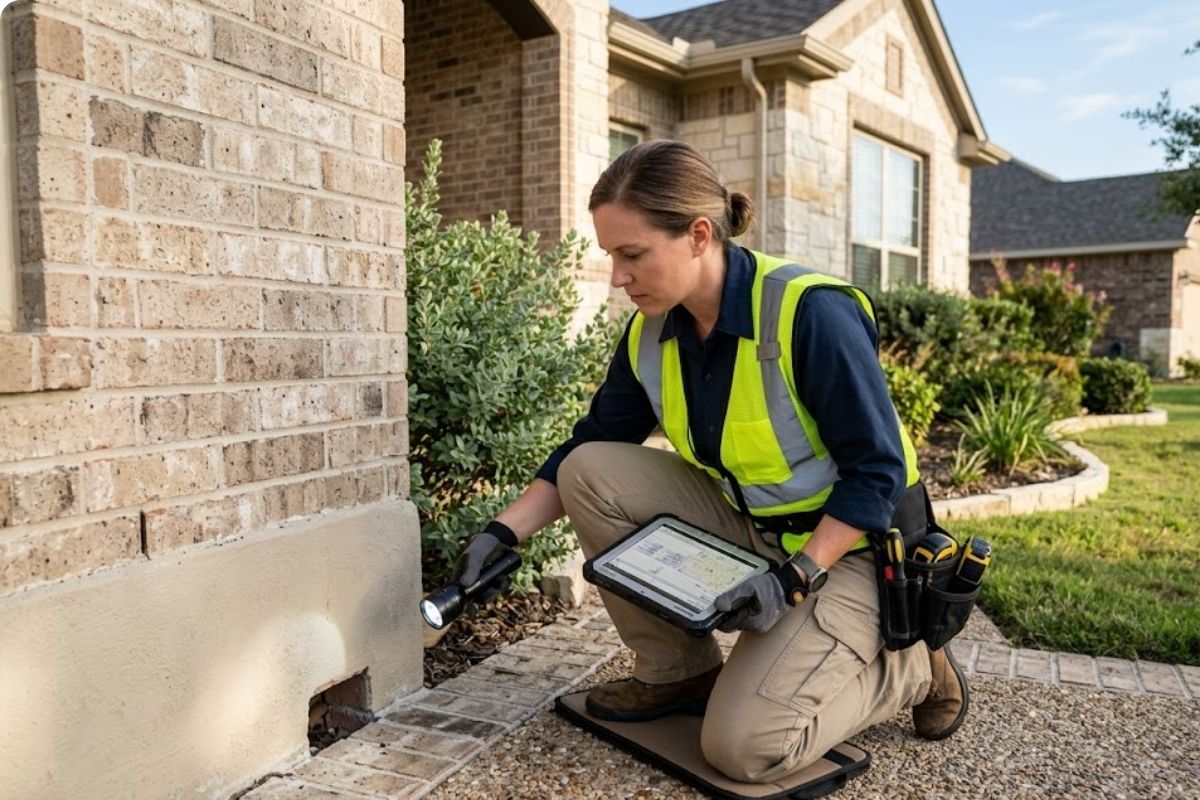
When the cropland is effectively your property line
In a settlement this small there is essentially no non-agricultural buffer, so the surrounding fields are effectively at the edge of nearly every property. The dominant pattern is rodent movement tied to the crop cycle: when fields are harvested or turned, displaced rodents reach the few homes here with almost no distance to travel, so the post-harvest push is felt across the whole settlement rather than only at a margin. Fire ants thrive in the clay-loam of the field-edge yards and rebuild after each irrigation and rain cycle, and irrigation water sustains mosquitoes through the warm year on a watering schedule rather than a rainfall one.
The modest, mostly older housing gives field rodents accessible entry on arrival, often with outbuildings acting as the staging ground from which they reach the home, so a structure-only read tends to miss the actual source. On brush-adjacent ground, kissing bugs are a documented presence in South Texas brushland that we check factually during service rather than as a blanket alarm. On a no-winter-knockback climate, this shifts with the agricultural calendar rather than stopping, so a settlement this close to the fields faces effectively continuous pressure and the relevant unit for a plan is the whole property.
What makes Lasara distinct from a larger farm town is that there is no meaningful 'town interior' insulated from the fields, so the crop-cycle rodent pattern is not something that reaches a few edge homes, it is the baseline condition for essentially every property. That is why the plan does not ask where in town a property sits but rather what its structure and outbuildings look like, since position relative to cropland is effectively constant here.
The outbuilding point matters especially in a settlement this old and small: sheds and storage on these properties are frequently the staging ground where field rodents establish before moving into the house, so an effective Lasara plan treats the whole property rather than just the structure.
Pest problem in Lasara? Call now.
Call (831) 703-7142 — Mon–Sat 7AM–7PM. No forms, just a real local team.
Call (831) 703-7142Scheduling Lasara, with Raymondville, Lyford, Sebastian
As travel-out service, Lasara coverage starts with a call that scopes the work and schedules it honestly around the drive. There is little ambiguity about position here, the cropland is the property line nearly everywhere, so the useful detail is the structure type, whether outbuildings are in play, and what is being seen, which lets the single trip out do the right work rather than a generic pass.
On the same Willacy County run we also reach Raymondville, Lyford, and Sebastian, so a problem spanning those communities is handled efficiently rather than fragmented across separate trips. We work Monday through Saturday, 7AM to 7PM, and where a covered pest returns between scheduled visits in this extended area, we come back and clear it again at no cost. As at every travel-out location at this distance, the no-winter climate means a maintained schedule holds where a single trip does not, said plainly rather than as local service. Phone (831) 703-7142 and tell us how close the Lasara property sits to the cropland edge.
Because there is no seasonal reset in this climate, the recurring point is structural: the crop-cycle pressure runs year-round, so maintained service holds where a single distant trip cannot.
Nearby areas we also serve
Frequently Asked Questions
We travel out from Brownsville, around an hour away, with no office there and no stationed crew. It is genuine extended-area coverage, the long Lasara drive stated plainly.
In a settlement this small there is essentially no non-agricultural buffer, so the surrounding fields are effectively at the edge of nearly every property and field-driven pressure is the whole story.
Post-harvest rodents reaching homes with almost no distance to travel, fire ants in the clay-loam field-edge yards, and irrigation-fed mosquitoes, with older housing giving field rodents accessible entry on arrival.
Kissing bugs are a documented presence in South Texas brushland, so on brush-adjacent ground we check that factually during service rather than treating it as a general alarm everywhere.
On the same Willacy County run we also reach Raymondville, Lyford, and Sebastian, so a problem spanning those communities is handled efficiently rather than fragmented.
Where a covered pest returns between scheduled visits in this extended area, we come back and clear it again at no cost. Phone (831) 703-7142 and describe how close the property sits to the cropland edge.