Palm Valley Pest Control: the Name Is the Clue
The town is called Palm Valley for a reason, and that reason, the heavy mature canopy over big wooded lots, is exactly what drives its pest pattern.
The town's name describes its pest risk
Palm Valley's name is not decorative. This small town bordering Harlingen is genuinely defined by its mature palm and tree canopy over large, heavily landscaped, low-density lots, and that canopy is also the most important single factor in its pest profile. The thing that makes the town attractive is the thing that drives the work here.
There is no industrial zone or farm engine in Palm Valley to complicate this. It is wooded residential property on generous lots, which means the dominant pressures come from the trees overhead and the maintained grounds below, not from neighbors packed close together. The name is, in effect, an honest summary of the pest situation.
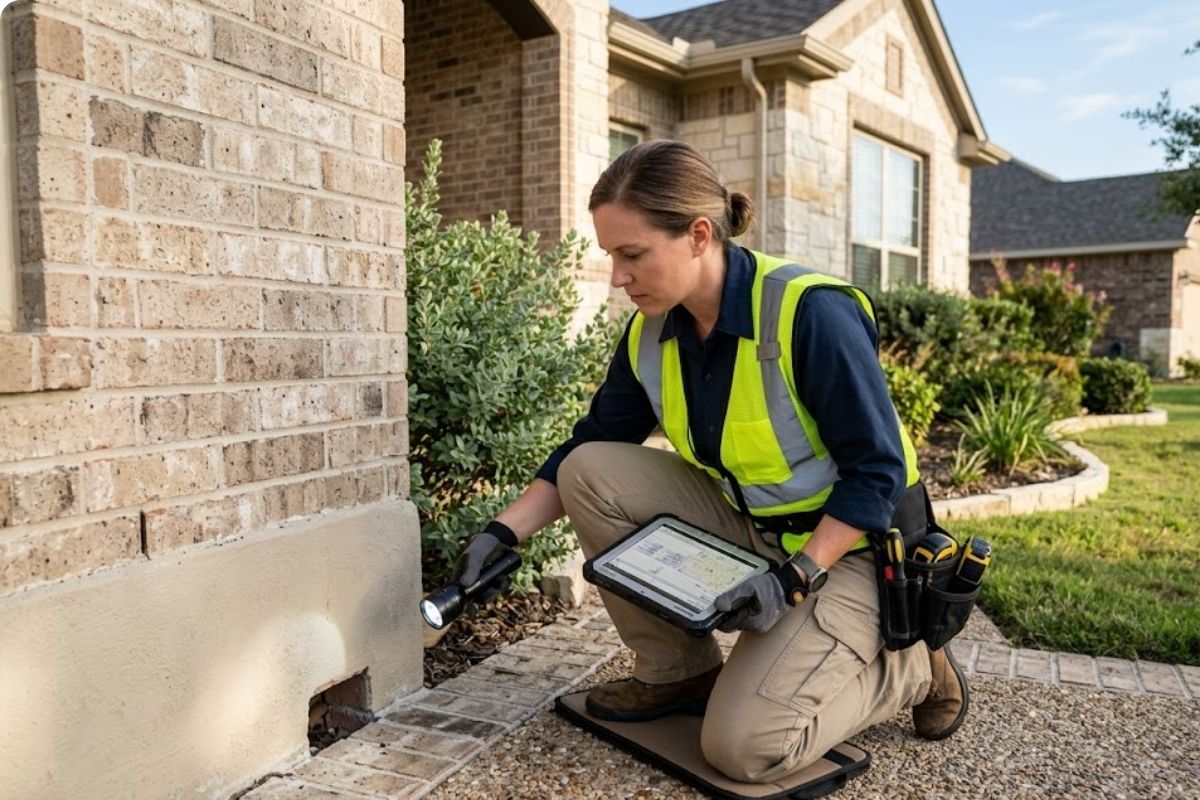
Canopy as a roof-rat road network
To a roof rat, the mature palm and tree canopy that gives Palm Valley its character is a road network. Wherever fronds and limbs reach a roofline they form direct bridges into attics, and a town with this much established canopy on large wooded lots is precisely the setting where roof rat pressure is highest. The first sign is usually night noise overhead rather than a sighting, and the damage, chewed wiring and compressed insulation, progresses out of sight in the attic.
This is why Palm Valley roof rat work is canopy-driven. Trapping out the current animals matters, but the durable step is sealing the roofline and trimming the palm fronds and limbs back off the roof so the bridge itself is gone, since on these wooded lots the canopy keeps delivering new rats until that contact is removed.
The grounds below the canopy
The generous, irrigated, well-planted lots add the second driver. Larger landscaped grounds in the warm clay-loam are fire ant territory, with colonies establishing in lawns and rebuilding after rain and irrigation, and the extra land, dense plantings, and any outbuildings bring the broader harborage and rodent considerations a big property carries that a small town lot does not. The lush landscaping that makes Palm Valley appealing is also what makes its grounds pest-productive.
So the town has two reinforcing drivers, the canopy overhead and the maintained land below, and a Palm Valley plan that addresses only one tends to leave the other working against it. With no winter knockback in this climate, neither driver pauses, so honest service here is maintained rather than one-time.
Pest problem in Palm Valley? Call now.
Call (831) 703-7142 — Mon–Sat 7AM–7PM. No forms, just a real local team.
Call (831) 703-7142Service scoped to the wooded lot
Effective Palm Valley work is built around both drivers: roofline sealing and canopy trimming for the rat pathway, plus maintained yard-level fire ant and grounds attention for the landscaped land, scoped to the specific wooded lot rather than a generic small-town template. We frame this as ongoing protection because the canopy and the grounds keep regenerating pressure, and saying otherwise would not be honest.
We operate from 3144 Boca Chica Blvd in Brownsville, Monday through Saturday, 7AM to 7PM, and serve Palm Valley along with nearby Harlingen, Combes, and Primera, so a problem moving between Palm Valley and an adjacent town is handled consistently. Should a covered pest reappear between scheduled Palm Valley visits, the return treatment is provided free of charge. Call (831) 703-7142 and tell us about your lot, the tree cover, and the grounds, so we can scope the plan to this specific wooded community.
Frequently Asked Questions
The mature palm and tree canopy that defines the town is effectively a road network for roof rats. Wherever fronds and limbs reach a roofline they bridge directly into attics, and a town with this much canopy on large wooded lots is exactly where roof rat pressure is highest.
Trapping out the current animals matters, but the durable step is sealing the roofline and trimming palm fronds and limbs back off the roof so the bridge is gone. On these wooded lots the canopy keeps delivering new rats until that contact is removed.
Yes. Generous irrigated, well-planted grounds in warm clay-loam are fire ant territory, and the extra land, dense plantings, and outbuildings add the harborage and rodent considerations a big property carries that a small town lot does not.
Less than it looks. The canopy does not stop bridging rats seasonally and fire ant colonies do not die back, and on large wooded lots where the trees and grounds are both substantial, that continuous pressure is amplified rather than diluted.
We serve Palm Valley along with nearby Harlingen, Combes, and Primera, so a problem that moves between Palm Valley and an adjacent town is handled consistently rather than handed off.
If a treated Palm Valley pest comes back between visits, the return treatment is included free of charge. Because both the canopy and the grounds drive steady year-round pressure, a maintained plan usually holds better than one-off calls.