Pest Service We Drive Out to Provide in Palmview
Palmview has grown fast at the western metro edge, mixing new subdivisions with older colonia-adjacent areas. We drive out from Brownsville and say so plainly.
A fast-growing western-edge community we reach on a drive
Palmview sits on the western edge of the continuous Hidalgo County metro along US-83, grown quickly from a smaller settlement into a mix of new subdivisions and older established and colonia-adjacent areas. We drive out to Palmview from 3144 Boca Chica Blvd in Brownsville, around an hour and a quarter, with no office there and no crew based in town. Its rapid, uneven growth is the most useful lens on its pests, and the distance is handled the same honest way as any travel-out location, built into the scheduling conversation rather than disguised as a local branch.
Palmview's defining trait is that unevenness. It expanded fast, so new construction and older colonia-adjacent areas sit side by side, and the two carry genuinely different pest profiles within one town. A trip out is scoped in the booking call so the single visit does the right work for whichever part of town the property is in rather than a generic pass.
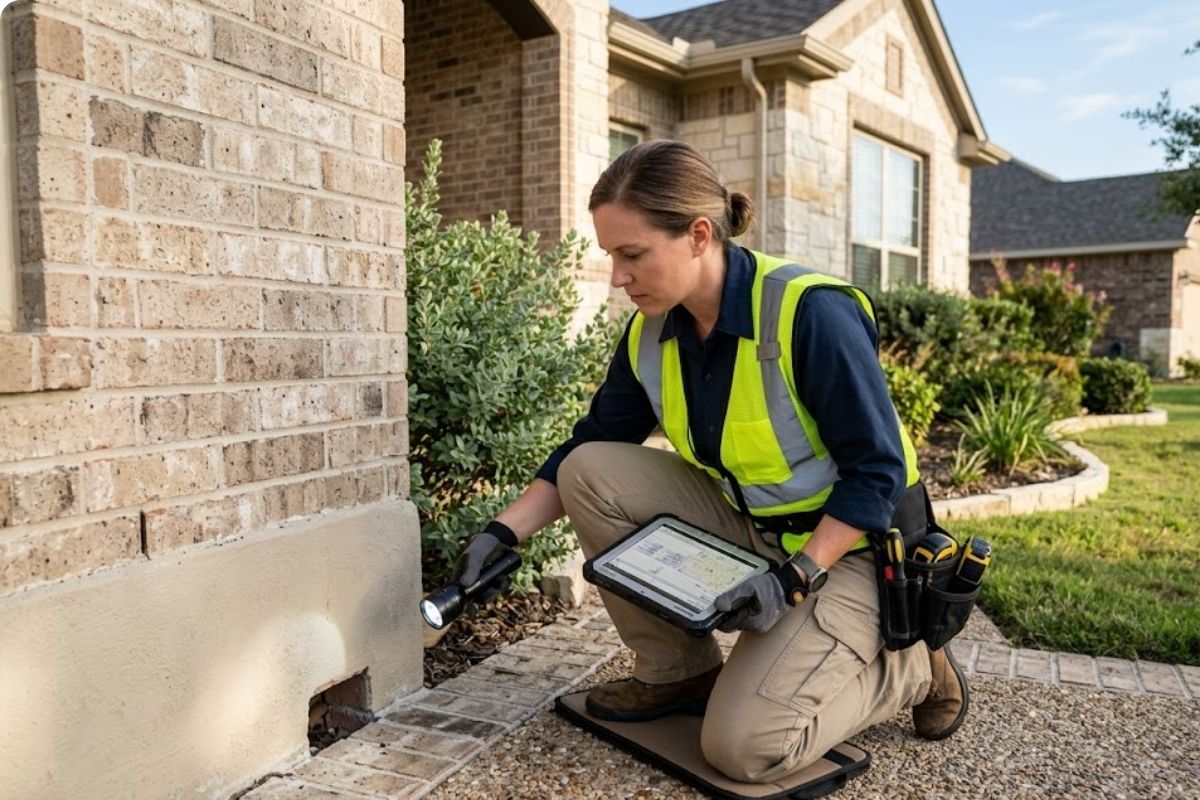
New subdivisions and the fresh-lawn pattern
The newer Palmview subdivisions bring the new-development pattern, and it is worth being concrete about it. Freshly graded clay-loam lawns and landscaping are prime fire-ant ground, with colonies establishing quickly and rebuilding after every irrigation and rain cycle, and the irrigation that keeps new landscaping green sustains mosquitoes through the warm year on a watering schedule rather than a rainfall one. Newer construction has fewer aging-foundation issues and tighter envelopes, so the emphasis on these lots is yard-level source reduction rather than the structural reads an older town needs. A plan weighted correctly for a new-subdivision lot looks different from one built for an older block.
Older and colonia-adjacent parts of town
The established and colonia-adjacent parts of Palmview tell the other half. Older and modest, often self-built housing has more structural gaps and variable sealing that give roaches and rodents accessible entry and harborage, and properties toward the rural and brushy western edge get field-and-brush pressure plus well-and-septic moisture points that draw pests differently than municipal-service housing. On brush-adjacent ground the documented Valley kissing-bug presence is weighed factually during service rather than as a general alarm.
On a no-winter-knockback climate, neither the new-subdivision nor the older-edge pattern resets seasonally, so the dominant driver follows the property's age and edge position rather than the calendar. That is exactly why which part of town the property is in is the single most useful thing a caller can specify, it flips the emphasis entirely.
There is also a rural-edge wrinkle specific to the western side of Palmview. Where lots back onto undeveloped brush and farmland and run on well and septic, the property is effectively a rural-edge case inside a growing town: outdoor pressure presses in from the open ground, and the well-and-septic moisture points draw pests in a pattern municipal-service housing does not show. Treating that kind of lot as if it were an interior subdivision address misses the actual driver.
Pest problem in Palmview? Call now.
Call (831) 703-7142 — Mon–Sat 7AM–7PM. No forms, just a real local team.
Call (831) 703-7142How to book a trip out, and the nearby towns we cover
As travel-out service, Palmview coverage starts with a call that scopes the work, newer subdivision lot versus older or rural-edge property, and schedules it with the drive accounted for. Naming which section the property occupies is the detail that reorders the plan, so it is worth leading with on the call.
On the same western-Hidalgo run we also reach Mission, Penitas, and La Joya, so a problem spanning those communities is handled efficiently rather than fragmented across separate trips. We work Monday through Saturday, 7AM to 7PM, and where a covered pest returns between scheduled visits in this extended area, the team comes back and treats it again at no cost. As at every travel-out location at this distance, the no-winter climate means a maintained rhythm holds where a single distant trip does not, and we say so plainly rather than implying a local turnaround. Call (831) 703-7142 and describe the Palmview property and which part of town it is in.
Because the climate gives no seasonal reset, the recurring-coverage point is not a sales line but a structural fact: whatever drives a given Palmview lot, new-subdivision yards or older-section structural gaps, that driver keeps operating year-round, so a maintained rhythm holds where a single distant trip does not. We say that plainly rather than implying a one-time pass solves a year-round problem at this range.
Frequently Asked Questions
We drive out from Brownsville, around an hour and a quarter away, with no office there and no crew based in town. It is genuine extended-area coverage, the Palmview travel stated plainly.
Freshly graded clay-loam lawns are prime fire-ant ground, and irrigation that keeps new landscaping green sustains mosquitoes. Newer construction has fewer foundation issues, so the emphasis is yard-level.
Yes. Established and colonia-adjacent parts have more structural gaps giving roaches and rodents entry, and rural-western-edge properties get field-and-brush pressure plus well-and-septic moisture points.
Both the new-subdivision and older-edge patterns sit on a no-winter-knockback climate, so fire ants, mosquitoes, roaches, and rodents stay active across the full year rather than resetting seasonally.
On the same western-Hidalgo run we also reach Mission, Penitas, and La Joya, so a problem spanning those communities is handled efficiently rather than fragmented.
Where a covered pest returns between scheduled visits in this extended area, the team comes back and treats it again at no cost. Call (831) 703-7142 and describe which part of town the property is in.