Pest Service We Bring Out to Roma
Roma is a notably old bluff-top river town in western Starr County. We drive out from Brownsville at a long distance and are clear about that.
Roma's very old core, a long drive from our base
Roma sits on the bluffs above the Rio Grande in western Starr County, distinguished by its notably old historic district of nineteenth-century buildings and a long-standing international crossing far up the river. We drive out to Roma from 3144 Boca Chica Blvd in Brownsville, a long haul of roughly an hour and three-quarters, with no office in town and no crew based there. Roma's unusually old building stock and bluff-and-river setting are the defining pest factors, and the distance is handled the same honest way as any travel-out location, built into the scheduling conversation rather than disguised as a local branch.
The run to Roma is a long one up US-83 to the bluff town, and scheduling is built honestly around it, a wider window and a trip planned to do the whole property at once. What makes Roma distinctive among the river towns is the age of its building stock, old enough that the structural pest reading dominates more than in most places.
Stating the distance plainly is the point: it is genuine coverage of a town nearly two hours out, scheduled around that drive, never a local presence implied by softer wording.
Why nineteenth-century buildings raise the structural stakes
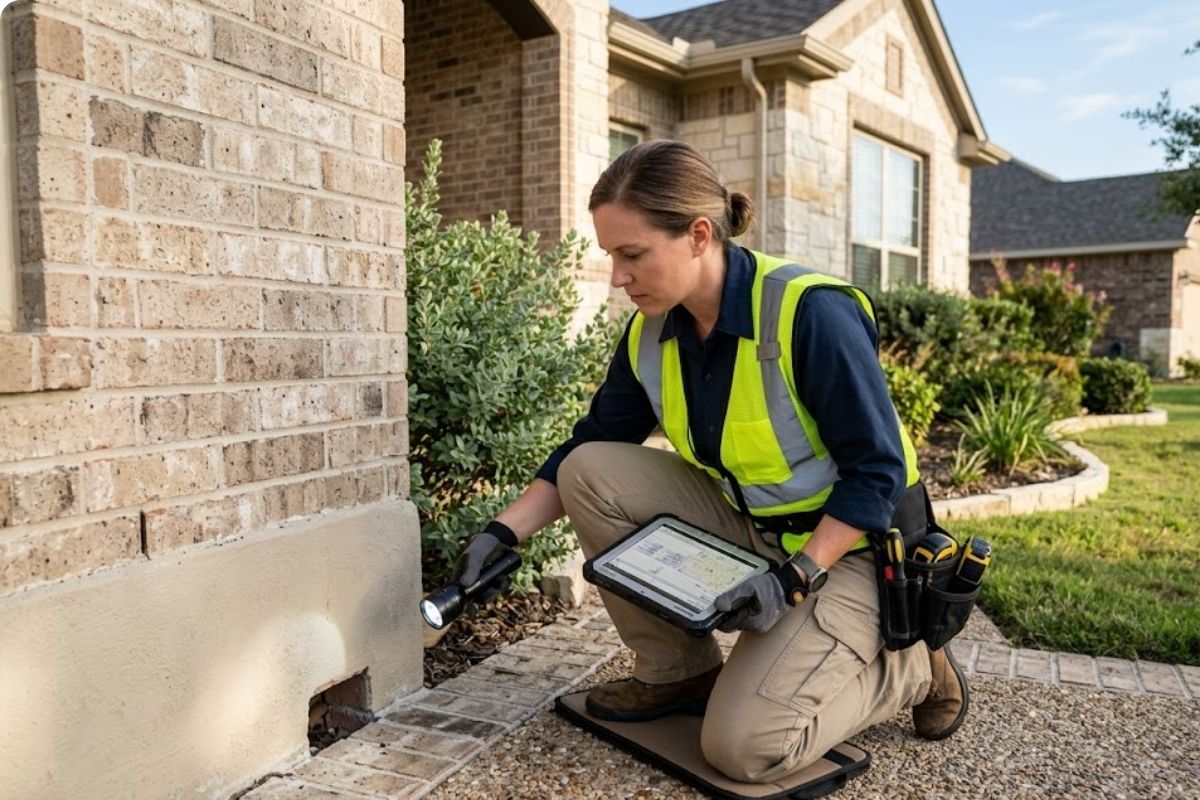
Roma's nineteenth-century and early-twentieth-century buildings, with original construction, long soil contact, and decades-old seals and materials, present heightened structural vulnerability: subterranean termites working unseen and abundant accessible routes for roaches and rodents that newer construction would not offer. Because the construction has had that long soil contact and those decades-old materials, the termite and roach-and-rodent route exposure is genuinely higher here than in a town of newer building stock, which is why the structural read leads the plan rather than following it.
The international crossing adds the throughput pattern on top, vehicle and goods movement carrying roaches and rodents through commercial areas so crossing-adjacent properties face arrival rather than purely local breeding. And the river bluff and its corridor below add riparian moisture and brush pressure toward the lower-lying and edge properties. On a no-winter-knockback climate, the old-structure, crossing, and river-corridor pressures all run year-round, so a Roma property's exposure depends on its age and its position relative to the crossing and the bluff rather than on any season.
The practical consequence is that a Roma plan for an old-district building usually starts below the visible structure rather than at it. Subterranean termites work from soil contact upward and out of sight, so on a nineteenth-century building the meaningful questions are about foundation contact, moisture, and the routes decades-old materials have opened, not about what is visible indoors. A plan that leads with the surface symptom on a building this old tends to miss the actual driver, which is why the structural read is the starting point here rather than an add-on.
Pest problem in Roma? Call now.
Call (831) 703-7142 — Mon–Sat 7AM–7PM. No forms, just a real local team.
Call (831) 703-7142Scheduling Roma; we also reach RGC, Escobares, Fronton
As travel-out service at a real distance, Roma coverage starts with a call that scopes the work, especially the structural read for older buildings, and schedules it with the long drive honestly accounted for. The age and location of the structure is the single most useful detail a caller can give, since the older the building and the closer to the bluff or crossing, the more the plan reorders.
On the same Starr County run we also reach Rio Grande City, Escobares, and Fronton. We operate Monday through Saturday, 7AM to 7PM; where a covered pest returns between scheduled Roma visits, we come back and treat it again at no cost. As at every travel-out location at this distance, the no-winter climate means a maintained rhythm holds where a lone trip does not, framed plainly rather than as local service. Phone (831) 703-7142 and describe the Roma property, especially its age and location.
Because the climate offers no seasonal reset, the recurring point here is structural rather than promotional: the old-building, crossing, and bluff pressures all run year-round, so a maintained Roma rhythm holds where a single long drive cannot.
That age-and-position read is exactly what the booking call is for, since on a building this old it changes the entire plan.
Nearby areas we also serve
Frequently Asked Questions
We drive out from Brownsville at a long distance, roughly an hour and three-quarters, with no office in town and no crew based there. The Roma coverage is real, with the long travel described honestly.
Its nineteenth- and early-twentieth-century buildings have original construction, long soil contact, and decades-old seals, presenting heightened structural vulnerability, unseen subterranean termites and abundant accessible routes for roaches and rodents.
Yes. The international crossing adds throughput, vehicle and goods movement carrying roaches and rodents through commercial areas, on top of the old-structure pattern that defines the town.
It does. The bluff and its corridor below add riparian moisture and brush pressure toward the lower-lying and edge properties, a separate driver from the historic core.
On the same Starr County run we also reach Rio Grande City, Escobares, and Fronton, so a problem spanning those communities is handled efficiently rather than fragmented.
Where a covered pest returns between scheduled Roma visits, we come back and treat it again at no cost. Phone (831) 703-7142 and describe the property's age and location.