Pest Service We Bring Out to San Juan
San Juan draws heavy visitor traffic and blends seamlessly into its neighbors. We drive out to it from Brownsville and are clear about that.
A high-traffic town we reach on a drive out
San Juan is known for the basilica that draws large numbers of visitors and sits in the continuous urbanized corridor along US-83 between Pharr and Alamo. We drive out to it from 3144 Boca Chica Blvd in Brownsville, just under an hour, with no office in the city and no stationed crew. The combination of a major visitor draw and a wall-to-wall urban fabric shapes its pest picture more than the city limits do.
The distance is handled the same honest way as any travel-out location: the drive is built into the scheduling conversation rather than disguised as a local presence. What makes San Juan distinct is less the city itself than its position, a high-traffic node with seamless continuity into its neighbors, so its pest picture is shaped by movement through it as much as by what is resident in it.
Practically, that means a San Juan visit is scoped in the booking call so the single trip out covers what the property actually needs in one pass, rather than leaving gaps that would require short return drives the distance does not support. The honesty about position is the point: it is real coverage of a city just under an hour away, described as exactly that.
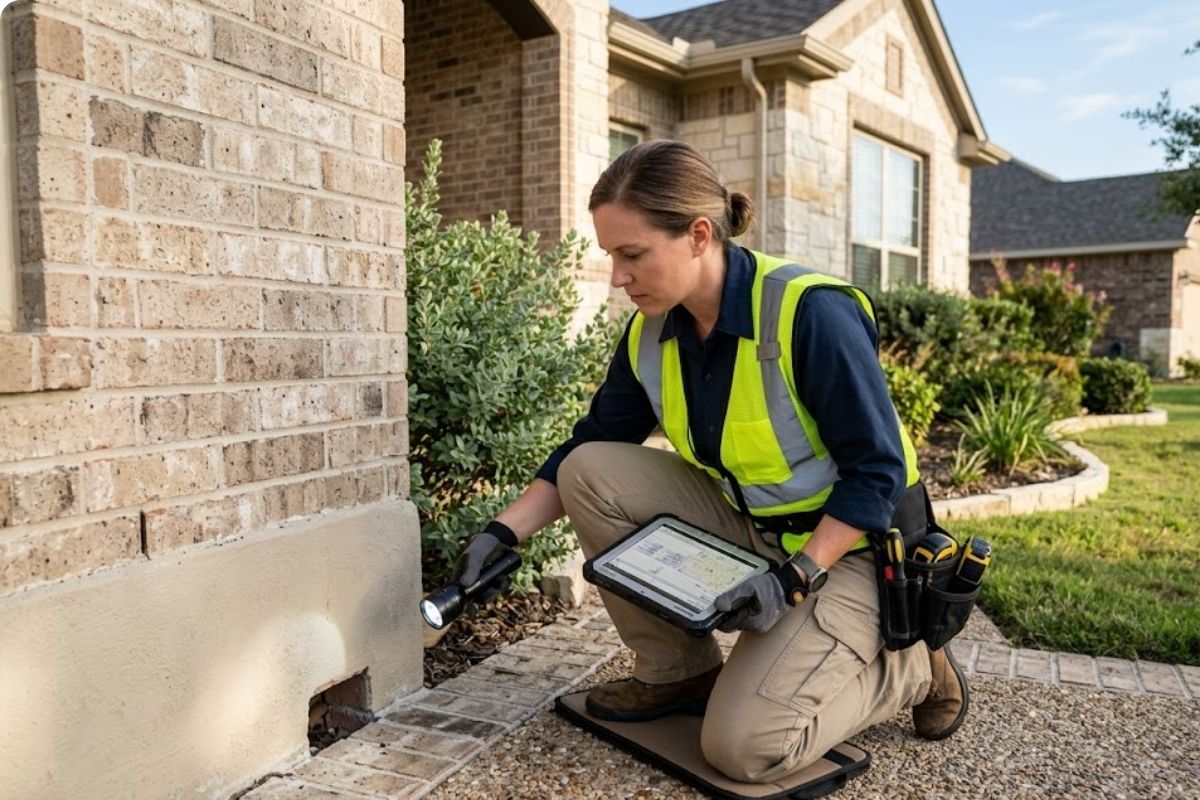
Visitor volume meeting a continuous built fabric
Significant pedestrian and visitor volume around the basilica, and the hospitality and food service that serves it, concentrates the pests that throughput carries: German roaches in commercial spaces and packaging, and rodents around food handling. That is the throughput pattern layered on top of an ordinary residential mix, and it behaves differently from a purely residential town's pressure.
The continuity has a concrete consequence too. Because the built fabric does not actually break between San Juan and Pharr and Alamo, the structurally mobile pests, German roaches and rodents, do not respect the city line, and a problem appearing in one block frequently reflects pressure originating in an adjoining one. Beneath that sits the mid-Valley residential mix, older neighborhoods with structural termite and roach vulnerability and newer subdivisions with fire-ant and irrigation-fed mosquito pressure, all on a no-winter-knockback climate that keeps every part of it active across the full year rather than resetting seasonally.
To make the continuity concrete: a German roach problem reported in one San Juan tenancy is rarely contained to it, because the shared walls, utility chases, and adjoining structures that run through the corridor are exactly the routes the species uses, and the same is true of rodents tracking food and shelter between units. That is why a unit-only response in this kind of continuous fabric often fails not for lack of effort but because the scope was set too small, the relevant unit is frequently the cluster, not the single address.
So a San Juan problem is frequently scoped to the cluster of adjoining units rather than the single address, because that is how the structurally mobile pests actually move here.
Pest problem in San Juan? Call now.
Call (831) 703-7142 — Mon–Sat 7AM–7PM. No forms, just a real local team.
Call (831) 703-7142How to set up a visit and the adjoining towns we cover
San Juan being travel-out service means coverage starts with a call that scopes the work and schedules it honestly around the drive. The useful detail for a San Juan caller is whether the property is in the visitor-and-commercial zone, where throughput-aware recurring attention leads, or in the residential fabric, where the standard structural and yard reads apply, because that determines how the visit is weighted and whether the surrounding units need to be considered as part of the same problem.
On the same continuous corridor we also reach Pharr, Alamo, and McAllen, so a problem spanning those adjoining communities is handled together rather than split across trips. We work Monday through Saturday, 7AM to 7PM, and should a covered pest reappear between scheduled visits in this extended area, we return and clear it again at no cost to the property owner. As with every travel-out location at this distance, the absence of a seasonal reset means maintained coverage is what holds, and we frame it that way without overpromising a local-style turnaround. Phone (831) 703-7142 and describe what you are dealing with in San Juan.
Frequently Asked Questions
We drive out from Brownsville, just under an hour away, with no office in San Juan and no stationed crew. It is genuine extended-area coverage with the distance stated plainly.
Yes. Significant pedestrian and visitor volume plus surrounding hospitality and food service concentrate the pests throughput carries, German roaches in commercial spaces and packaging and rodents around food handling.
San Juan blends into Pharr and Alamo with little open ground, so structurally traveling pests move along that continuous fabric rather than stopping at a city line; a problem in one block often reflects pressure from an adjoining one.
Yes. The mid-Valley residential mix sits on a no-winter-knockback climate, so termites, roaches, fire ants, mosquitoes, and rodents stay active across the full year rather than resetting seasonally.
On the same continuous corridor we also reach Pharr, Alamo, and McAllen, so a problem spanning those adjoining communities is handled together rather than split across trips.
Should a covered pest reappear between scheduled visits in this extended area, we return and clear it again at no cost. Phone (831) 703-7142 and describe what you are dealing with.