Pest Control Serving Weslaco
Weslaco is ringed by working farmland, and what happens in those fields, especially after harvest, shows up in the homes at the edge of town.
A town shaped by the fields around it
Weslaco's character is agricultural. The city sits in the middle of citrus groves, produce fields, and the irrigated farmland that defines this stretch of Hidalgo County, and that surrounding agriculture is the single most important factor for understanding pests here. A farm town's pest pressure does not come primarily from within the city; it comes from the working land around it and moves inward.
Around Weslaco we typically see this as a seasonal-feeling rhythm tied to the agricultural cycle rather than the calendar alone. When fields are harvested or turned over, the cover and food that sustained rodents and other field pests vanishes almost overnight, and those populations do not disappear, they relocate toward the nearest standing structures, which are the homes and businesses along the field-adjacent edges of town.
Post-harvest rodent movement and the older housing
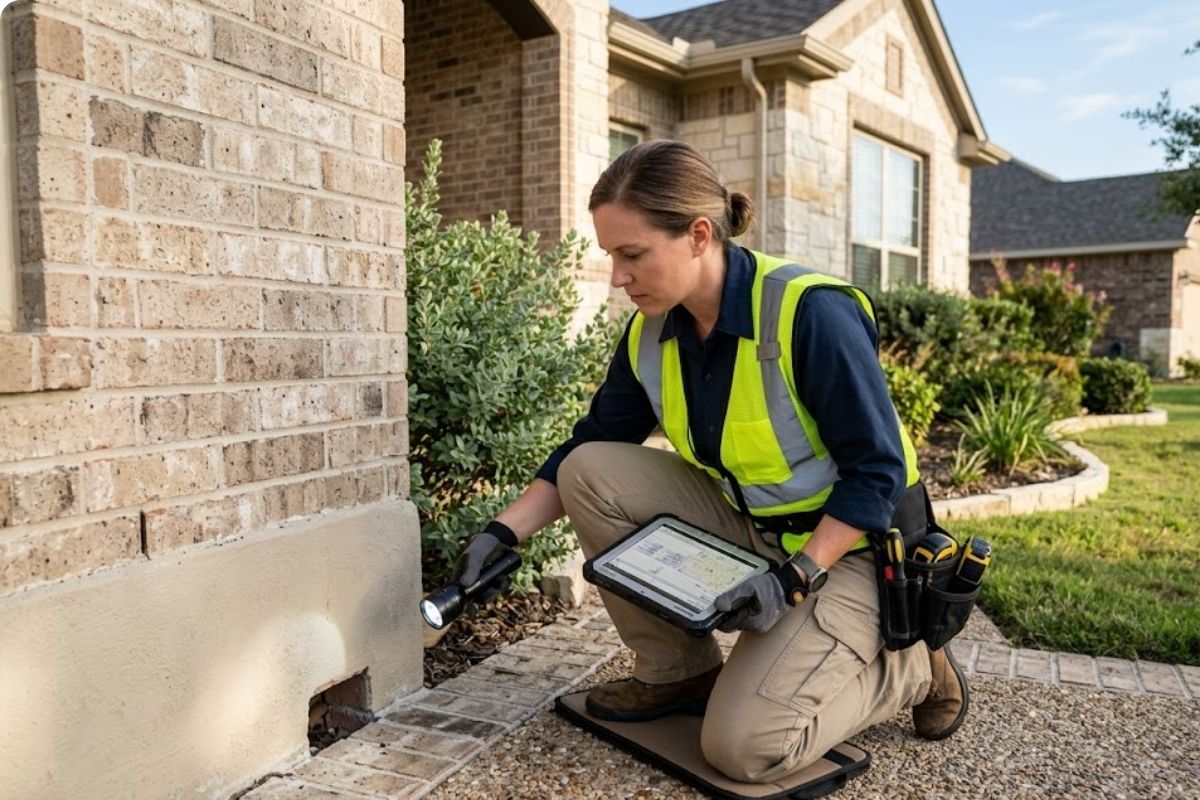
The defining Weslaco pattern is post-harvest rodent migration. When a field is cleared, displaced rodents push toward field-edge homes looking for the food and shelter they just lost, and properties backing onto or near agricultural land see noticeable rodent pressure in those windows. Weslaco's older housing stock compounds this: aging homes with more structural gaps, older foundations, and outbuildings give field rodents the entry points and harborage they are looking for once they reach the edge of town.
The combination, working fields next to older, more penetrable housing, is what makes Weslaco distinct from a newer planned suburb. The same harvest that is good news for a grower is the trigger for a rodent push into the homes nearby, and an older home is far easier for those rodents to exploit than a tightly built new one.
The other field-driven pests
Rodents are the headline, but the agricultural setting drives more than that. Irrigation canals and field-edge water sustain mosquito activity through the warm year, fire ants thrive in the clay-loam of pasture-edge and field-adjacent yards, and the general outdoor insect load from undeveloped and cultivated land presses on the homes along the boundary. With no real winter knockback in this climate, none of this pauses; it shifts with the agricultural cycle but does not stop.
In our experience the Weslaco properties that stay ahead of this are the ones treated with the field boundary in mind, exclusion and rodent attention timed around harvest periods, and ongoing yard-level pressure managed rather than reacted to. A field-edge home and a home deep in the older town center are different situations, and honest treatment reflects that.
Pest problem in Weslaco? Call now.
Call (831) 703-7142 — Mon–Sat 7AM–7PM. No forms, just a real local team.
Call (831) 703-7142Serving Weslaco and the nearby farm towns
We are based in Brownsville at 3144 Boca Chica Blvd and serve Weslaco as part of our area, Monday through Saturday, 7AM to 7PM. The plan is matched to where your property sits relative to the fields, exclusion-focused and harvest-aware for field-edge homes, structural attention for the older housing stock, and ongoing management for the irrigation-driven mosquito and fire ant pressure.
We also regularly serve the nearby farm communities of Mercedes, Progreso, and Progreso Lakes, so a rodent or field-driven problem that moves between Weslaco and an adjacent town is handled consistently. If a pest we have treated returns before your next scheduled visit, the follow-up is included at no cost to you. Call (831) 703-7142 and tell us whether your property is field-adjacent, since that genuinely changes the approach.
Nearby areas we also serve
Frequently Asked Questions
When the surrounding fields are harvested or turned over, the cover and food sustaining field rodents disappears almost overnight, and those populations relocate toward the nearest structures, the homes and businesses along the field-adjacent edges of town.
Yes, considerably. A field-edge home sees post-harvest rodent pushes and field-driven insect pressure that a home deep in the older town center does not, which is why treatment in Weslaco is matched to where the property sits relative to the agriculture.
They tend to be. Aging homes with more structural gaps, older foundations, and outbuildings give displaced field rodents exactly the entry points and harborage they seek once they reach the edge of town, more so than tightly built newer homes.
Irrigation canals and field-edge water sustain mosquitoes through the warm year, and the clay-loam of pasture-edge and field-adjacent yards favors fire ants. With no real winter knockback, this shifts with the agricultural cycle but does not stop.
We regularly serve the nearby farm communities of Mercedes, Progreso, and Progreso Lakes in addition to Weslaco, so a rodent or field-driven problem moving between Weslaco and an adjacent town is handled consistently rather than handed off.
If a pest we treated returns before your next scheduled visit, the follow-up treatment is included at no cost. For field-adjacent homes, harvest-aware recurring service usually holds better than a single treatment given the agricultural cycle.